QSR Equipment Maintenance: Fryer, Hood, Walk-In
Concoct team
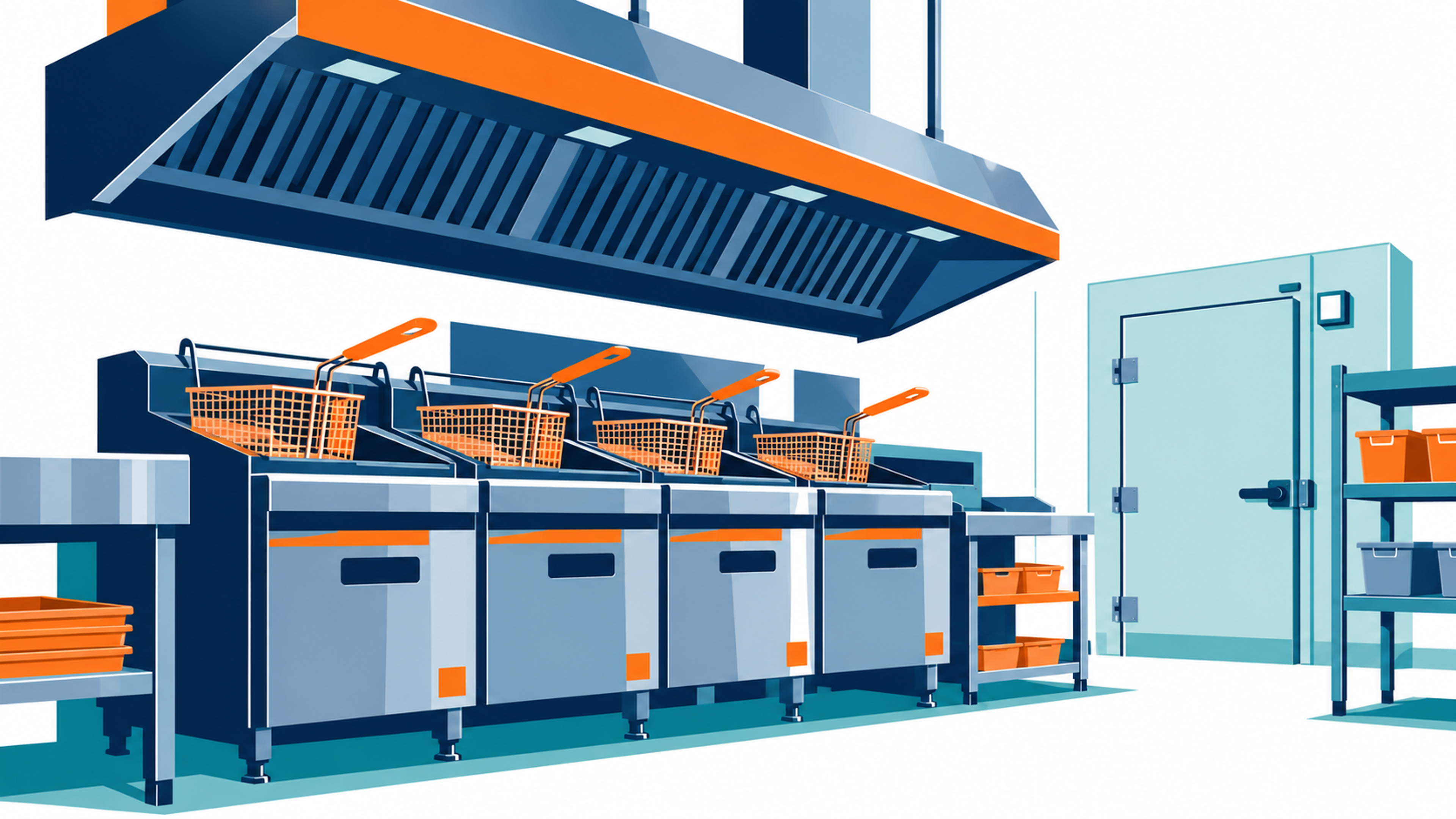
It is 6:40 on a Friday evening and the fryer will not hold temperature. The line is ten deep. The shift lead says the thermostat has been "a bit off" for two weeks. Nobody wrote it down, the last service visit was before anyone on shift started, and the technician you usually call is booked until Monday.
Most big kitchen failures are small problems that nobody owned. A restaurant equipment maintenance schedule fixes that by deciding in advance what gets checked, how often, and by whom. This one covers the three pieces of equipment that cause the most expensive Friday nights: fryers, exhaust hoods and walk-in coolers and freezers.
One caution first. The frequencies below are starting points, not rules. Your equipment manuals, your insurer and your local fire and health authorities set the real requirements, and they differ by province, state and municipality. Where they are stricter than this page, follow them.
Fryers
Fryers fail slowly (oil quality, temperature drift) or suddenly (a heating element, a gas valve). The slow failures show up in daily habits.
Daily (shift lead, a few minutes):
- Filter or change oil according to your brand standard and the oil quality you see, not just the clock
- Check that the fryer reaches and holds set temperature, and note it if it does not
- Clean the cabinet and the area around the vat
- Look for oil leaks and frayed cords
Weekly (site manager):
- Boil out or deep clean the vat if your manufacturer recommends it
- Check the temperature with an independent probe against the controller reading
Quarterly to annually (contractor):
- Calibrate thermostats and test the high-limit safety
- Inspect gas connections, burners, heating elements and wiring
- Check any built-in fire suppression nozzles are in place and uncovered
A clear gap between the controller and the probe is a work order, not a note in the margin. Ask your manufacturer how much gap is acceptable.
Exhaust hoods and ducts
The hood is where maintenance, insurance and fire safety meet. Grease build-up is a fire load, and insurers and local fire codes often set cleaning frequencies based on how much you cook. Heavy-fryer and high-volume kitchens are commonly expected to clean more often than light-use ones. Confirm the interval for your site with your insurer and your fire authority.
Daily:
- Wipe the hood surfaces and grease cup
- Check the exhaust fan is running and the hood is pulling air
Weekly to monthly:
- Wash or swap baffle filters; greasy filters are a fire risk
- Check the roof fan for noise and grease overflow
Per the required interval (certified contractor):
- Full hood, plenum and duct cleaning, with the service sticker dated and the report kept
- Fire suppression system inspection, usually done by a certified company on a schedule your insurer or fire authority sets
Keep the cleaning report, not just the invoice. If there is ever a fire, a claim or an inspection, the dated report is what you will be asked for.
Walk-in coolers and freezers
Walk-ins fail quietly and then all at once. A failing evaporator fan or dirty condenser coil can go unnoticed until product starts to warm.
Daily:
- Read and log the temperature from a thermometer inside, not only the door display. Commonly cited targets are 4°C (40°F) or colder for cooling and -18°C (0°F) or colder for freezing; confirm the targets with your local public health unit
- Check the door closes and seals, and that nothing blocks the evaporator fan
- Look for ice on the door frame or floor
Monthly:
- Check door gaskets for tears and gaps
- Test the door closer and the interior safety release
- Check the condenser coil is free of dust and grease, and the drain line is clear
Quarterly to twice yearly (refrigeration contractor):
- Clean the condenser coil properly
- Inspect fans, defrost cycle and refrigerant lines
Ice on the evaporator or a compressor that never seems to stop are early warnings. Log them the day you see them.
Making the restaurant equipment maintenance schedule stick
A schedule only works if someone owns each line. Three habits matter more than exact intervals.
- Name an owner for each task. "Kitchen" is not an owner. A shift lead or the site manager is.
- Log exceptions, not ticks. A signed sheet saying everything is fine tells you nothing. A note saying "fryer 2 reads 15 degrees low" tells you what to fix.
- Keep the history per machine. The third time a walk-in fan fails, you want the first two repair dates when you choose between repairing and replacing.
For the wider site routines these three machines sit inside, see the restaurant and convenience store maintenance checklist.
Running it across several sites
With one kitchen, a laminated sheet and a good manager can work. With six or sixteen, the questions change. Which store's hood is overdue? Which fryer has had three service calls this year? Who is the contractor, and when did they last come?
This is where a maintenance system helps. In Concoct, recurring preventive maintenance schedules can be set per piece of equipment, each machine has a record with make, model, serial number and install date, and work orders can be linked to the equipment so repair history builds up per machine. Contractors get a single emailed link for each job and do not need an account; the details are in how to manage vendors who refuse to log in.
What it does not do: it does not replace your contractor or your fire-code inspections, it will not know your local requirements, and it has no SMS reminders or offline mode. You still decide the intervals. It keeps them written down, assigned and visible across sites. The 30-day rollout plan for 10 sites shows one way to phase it in.
Ready to see it on your own equipment?
Pricing is per location with unlimited users on every plan, and it is public on the pricing page. If you would rather see a fryer, hood and walk-in schedule on your own equipment list, book a demo.
FAQ
How often should a restaurant fryer be serviced by a professional?
Many operators book a professional check once or twice a year (confirm with your manufacturer), covering thermostat calibration, the high-limit safety, burners or elements, and wiring. High-volume sites may want it more often. Check your manufacturer's guidance and any insurer requirements.
How often should kitchen exhaust hoods and ducts be cleaned?
It depends on what you cook and how much. Commonly cited intervals vary widely, from every few months for heavy frying to once or twice a year for light use. Your insurer and local fire authority set the requirement for your site, so confirm with them and keep the dated cleaning report.
What is a safe walk-in cooler temperature?
A commonly cited target is 4°C (40°F) or colder for coolers and -18°C (0°F) or colder for freezers. Confirm the exact targets with your local public health unit, and log readings from a thermometer inside the unit rather than relying only on the door display.
Who should own each task: the store team or a contractor?
Daily and weekly checks belong to the shift lead and site manager. Calibration, coil cleaning, refrigerant and gas work, hood and duct cleaning, and fire suppression belong with qualified contractors, sometimes certified ones. Your insurer may specify.
Do I need software to run a restaurant equipment maintenance schedule?
No. A well-kept sheet works for a single site. Software starts to earn its place when you have several locations and need to see overdue tasks, repair history per machine and contractor details in one view.